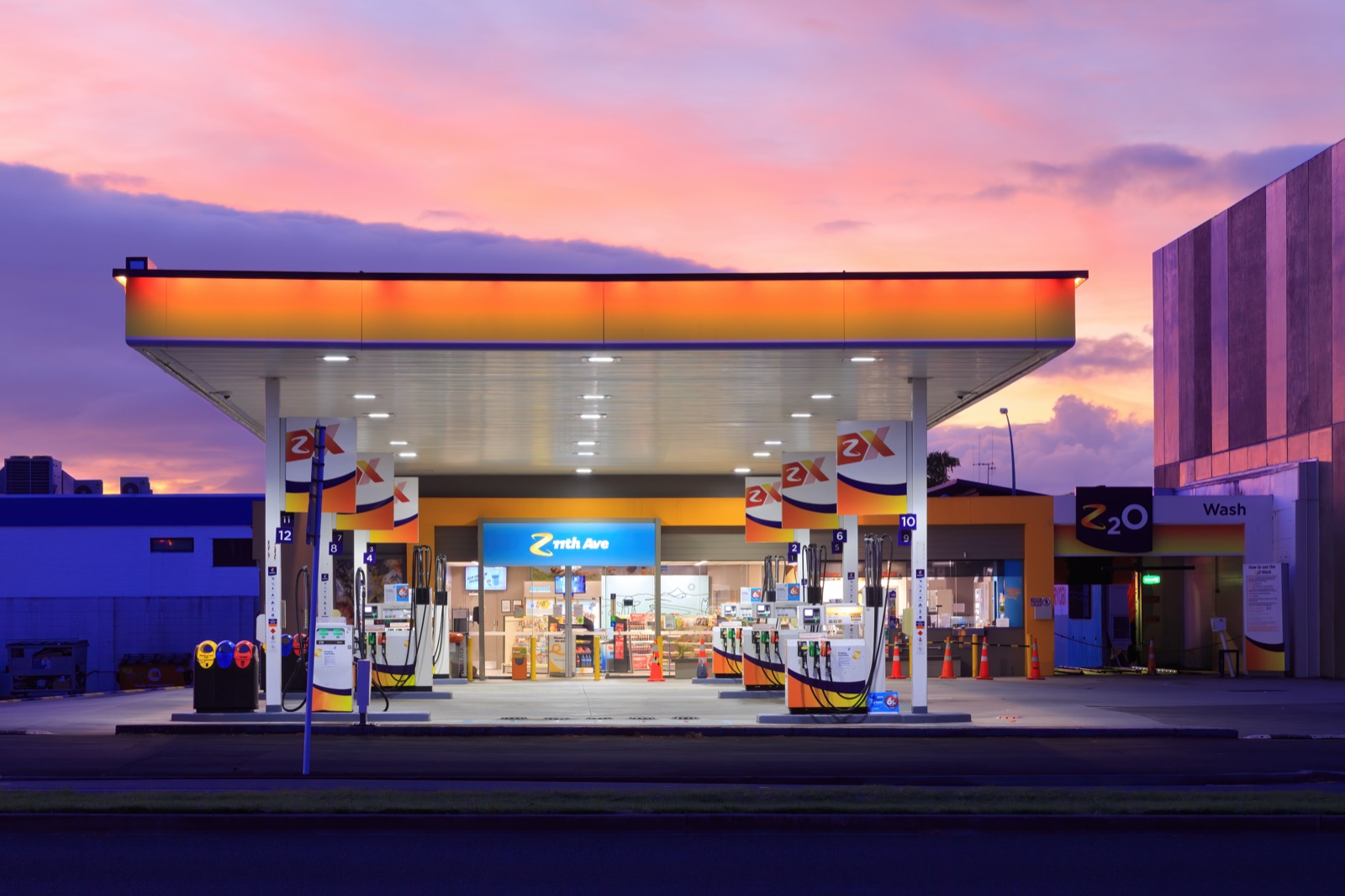
The Gilbert gas station market
Gilbert's appeal as a fuel market comes down to population growth and traffic. Arizona is a Sun Belt expansion state, and East Valley commuter corridors generate the high gallon counts that lenders and buyers want to see. A busy urban station does 100,000 to 150,000 gallons per month, well above the US average near 4,000 gallons per day. That volume matters because fuel is a thin-margin business. In 2025 fuel gross margins averaged 40 plus cents per gallon, but net fuel profit is only a few cents per gallon. The real money is inside. C-store sales run about 30 percent of revenue but roughly 70 percent of profit, with in-store items carrying 20 to 40 percent margins. Start with our valuation calculator or the profit margins guide . Use the sector resources to prepare your questions, or send an independent inquiry.
Buying a gas station in Gilbert
Most Gilbert buyers finance with SBA or conventional debt. SBA 7(a) caps at 5 million dollars, and because fuel stations are special-purpose, lenders require a 15 percent minimum equity injection, meaning 10 to 15 percent down. SBA real estate terms run up to 25 years, with June 2026 rates around 9 to 11.5 percent APR variable and closings in 30 to 90 days. Conventional debt asks 30 to 40 percent down, and many banks avoid underground storage tanks because of CERCLA liability, with closings in 30 to 60 days. Budget for a Phase I ESA at 1,800 to 3,500 dollars under ASTM E1527-21, required on SBA fuel deals. See the first-station guide . Use the sector resources to prepare your questions, or send an independent inquiry.
Selling a gas station in Gilbert
Sellers in Gilbert get the strongest result when the asset is packaged for the right buyer pool. Business-only deals trade at 2.5x to 4.0x EBITDA, smaller stores at 2.0x to 3.5x SDE, combined operations at 4.0x to 7.0x EBITDA, and fee-simple real estate near 8x EBITDA, reaching 7x to 9x in premium markets. Pricing also hinges on environmental clean status, fuel supply contracts, and verified throughput. Sale timelines run 3 to 6 months. On fees, business broker commissions are typically 10 to 20 percent on business-only deals and about 6 to 10 percent on real-estate-inclusive transactions. We position Gilbert listings, manage diligence, and protect value through closing. Explore our disposition services, the sale-leaseback option for owner-operators, and the selling guide.
Values and cap rates in Arizona
Arizona pricing follows the national framework. Convenience-store cap rates run about 5.6 percent overall, roughly 5.58 percent with fuel and 6.87 percent without. Tenant credit drives the spread: Wawa trades at 4.83 to 5.20 percent, 7-Eleven at 5.00 to 5.40 percent, Murphy USA near 5.13 percent, and Circle K at 5.35 to 5.65 percent. Tighter Sun Belt states like Florida price near 5.11 percent and Texas around 5.63 percent, while weaker markets push 6.0 to 6.5 percent plus. A small-to-medium station owner often nets about 70,000 to 100,000 dollars per year, rising to 100,000 to 500,000 by site. Run scenarios with the cap rate calculator and review cap rates by state and what a good cap rate looks like.